

TEL
+886-222774593
FAX
+886-222774593
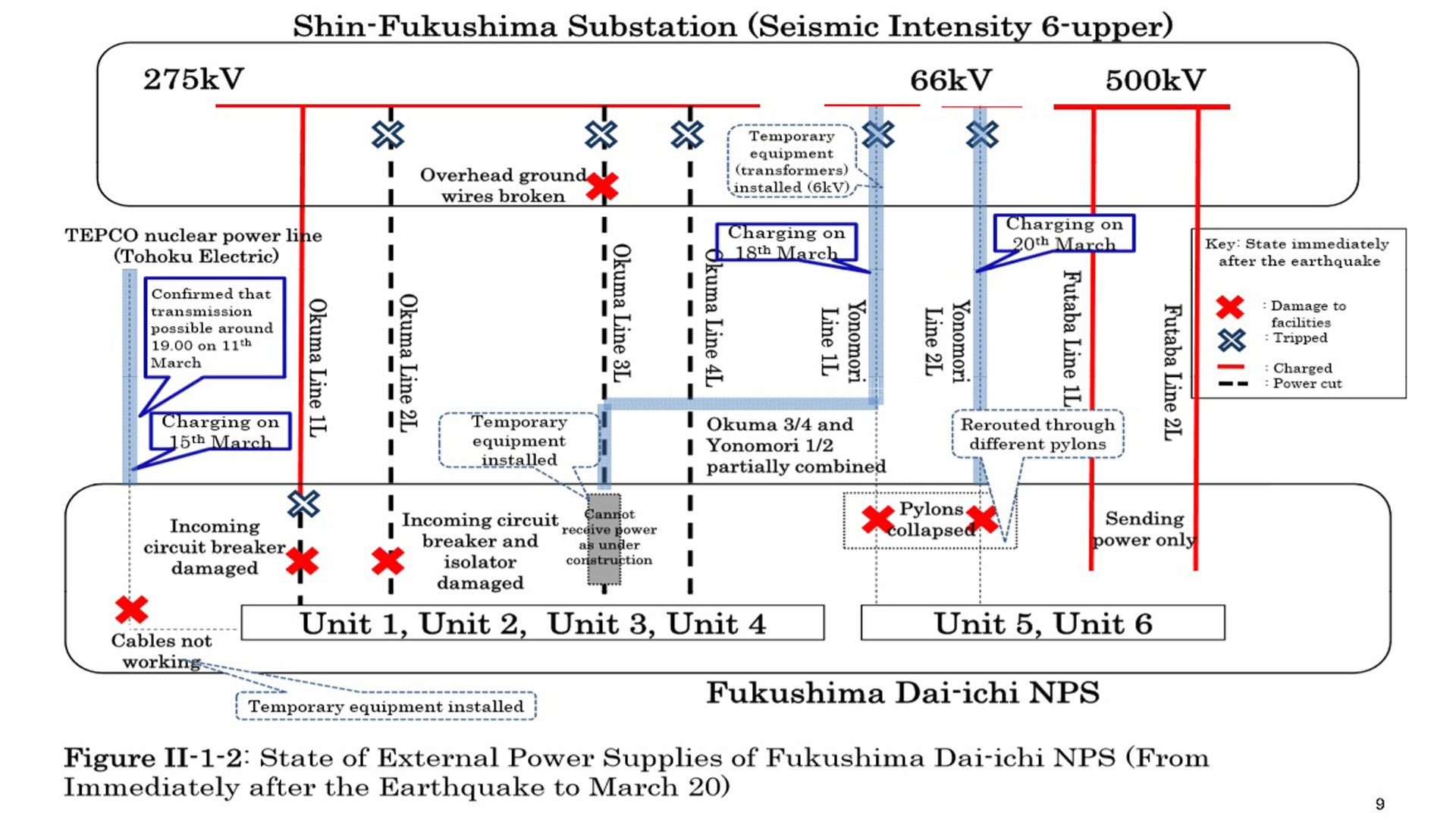
Fukushima Daiichi Nuclear Power Plant Accident – March 11, 2011




Image Source: Technical Knowledge of the Accident at Fukushima Dai-ichi Nuclear Power Station of Tokyo Power Co., Inc.
At the moment of the 3/11 earthquake:
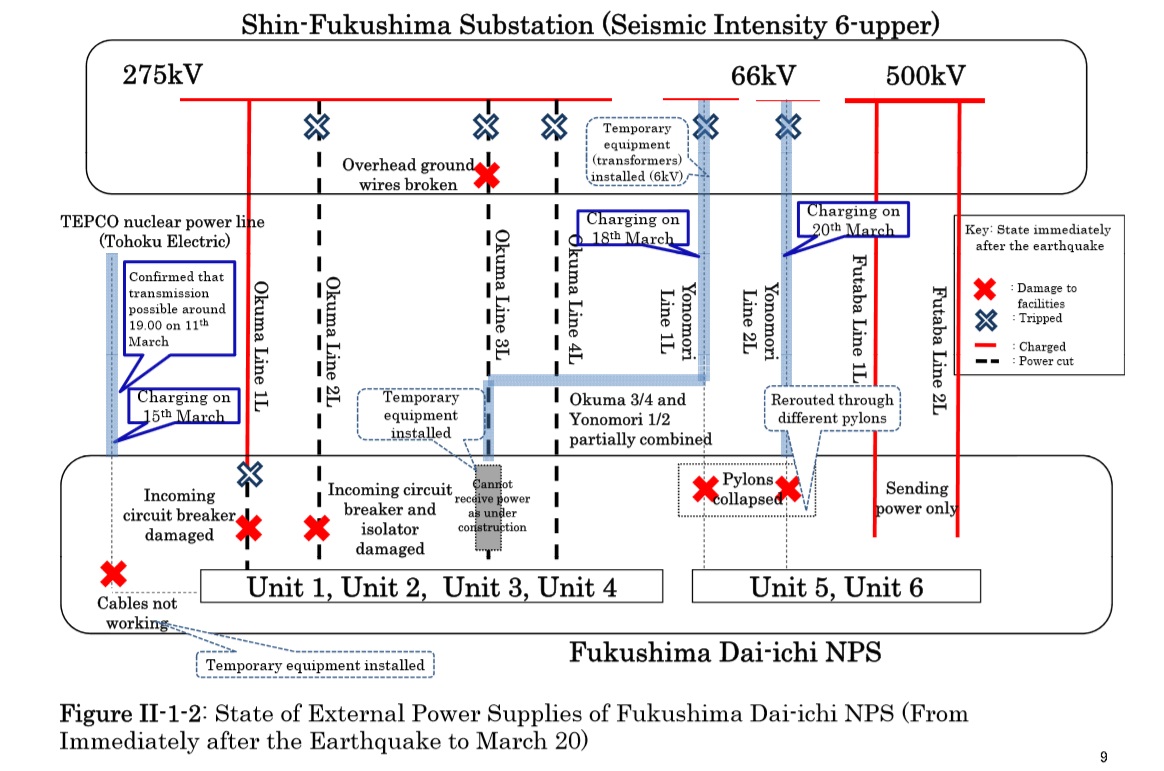
In addition to some circuit breakers tripping normally, deformation and failures such as toppled circuit breakers, overhead lines, and transmission towers caused all seven external power lines to Fukushima to be lost. (See Figure II-1-2)
After the tsunami:
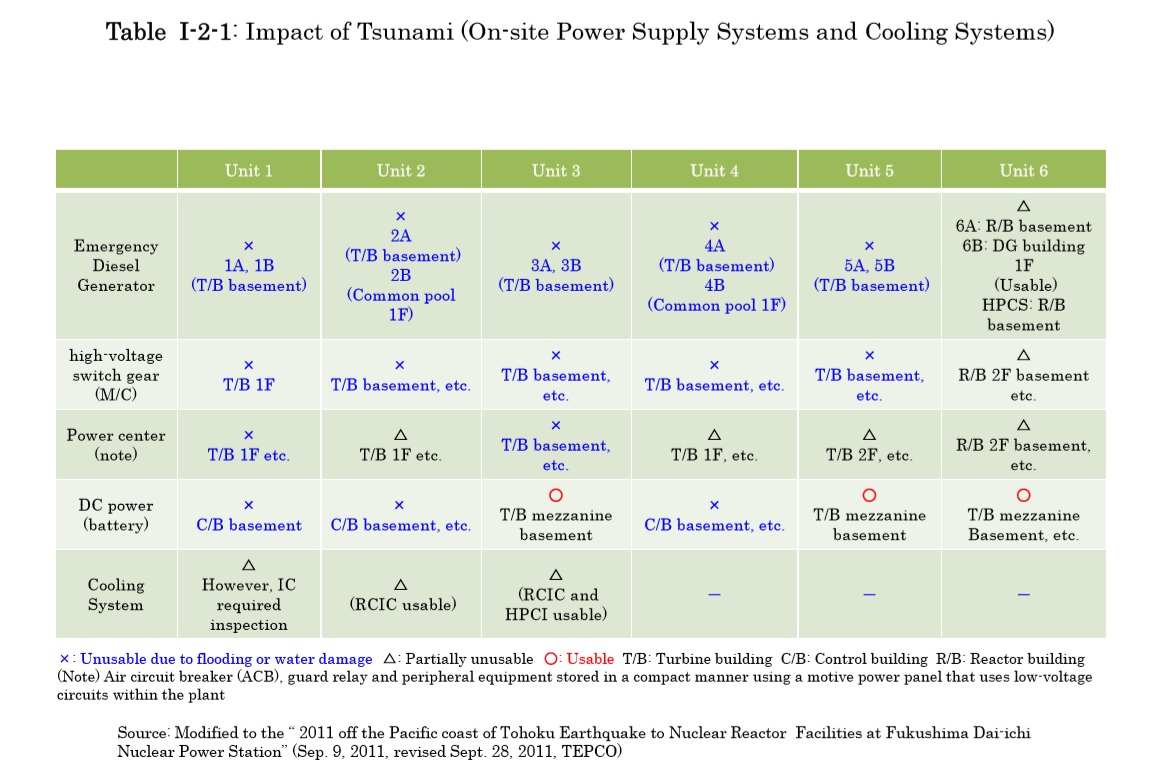
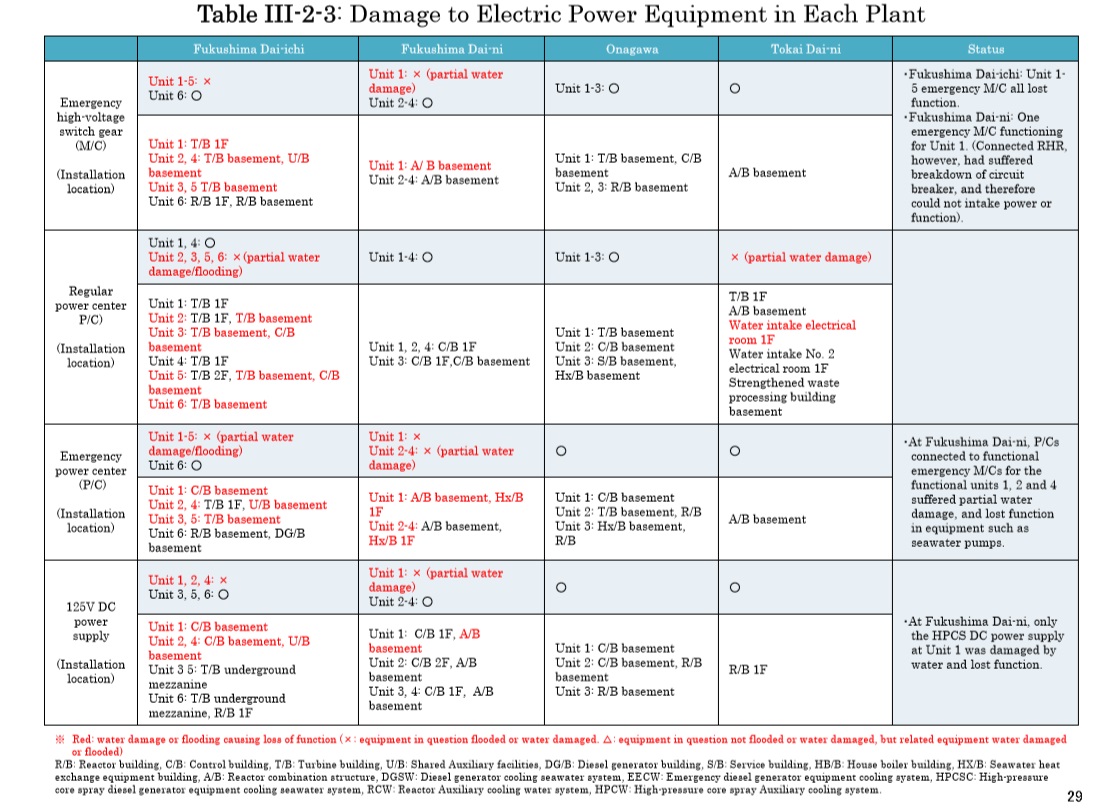
Severe damage occurred to various internal power systems, particularly the loss of DC 125V power in Units #1, #2, and #4 C/B buildings. (See Figure I-2-1)
After the accident:
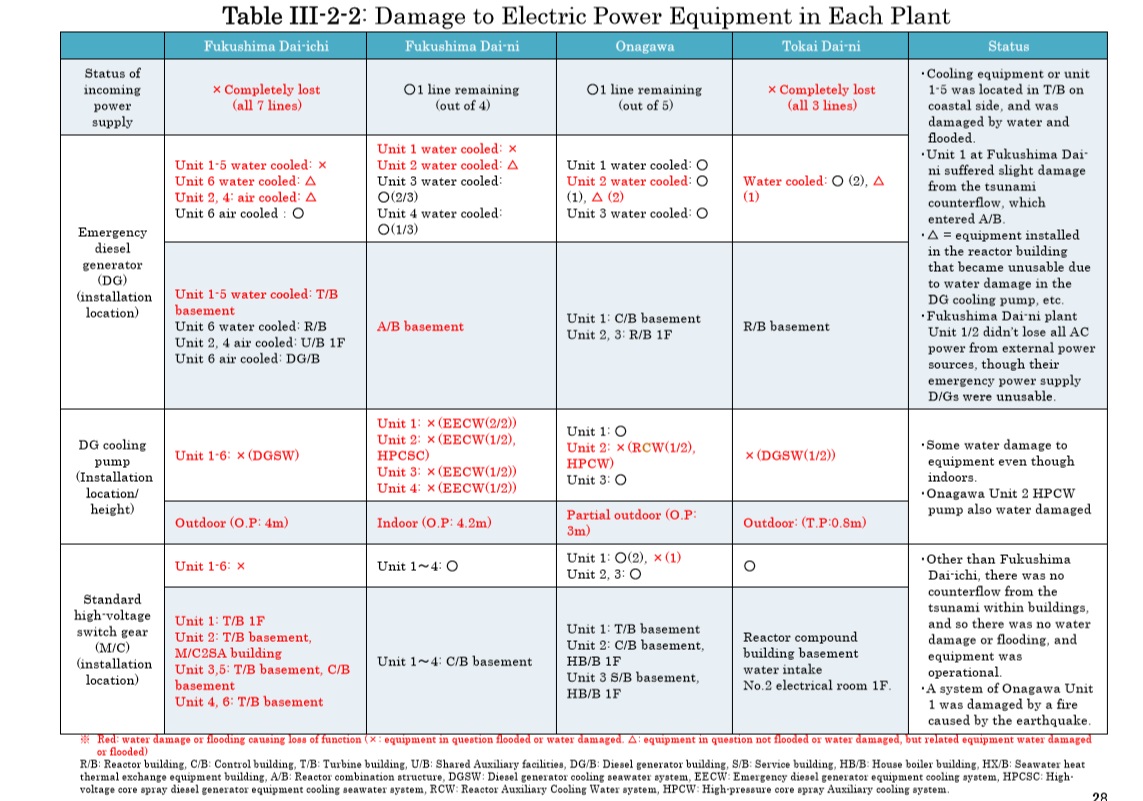
Damage conditions of electrical equipment at various nuclear power plants. (See Figure III-2-2 and Figure III-2-3)
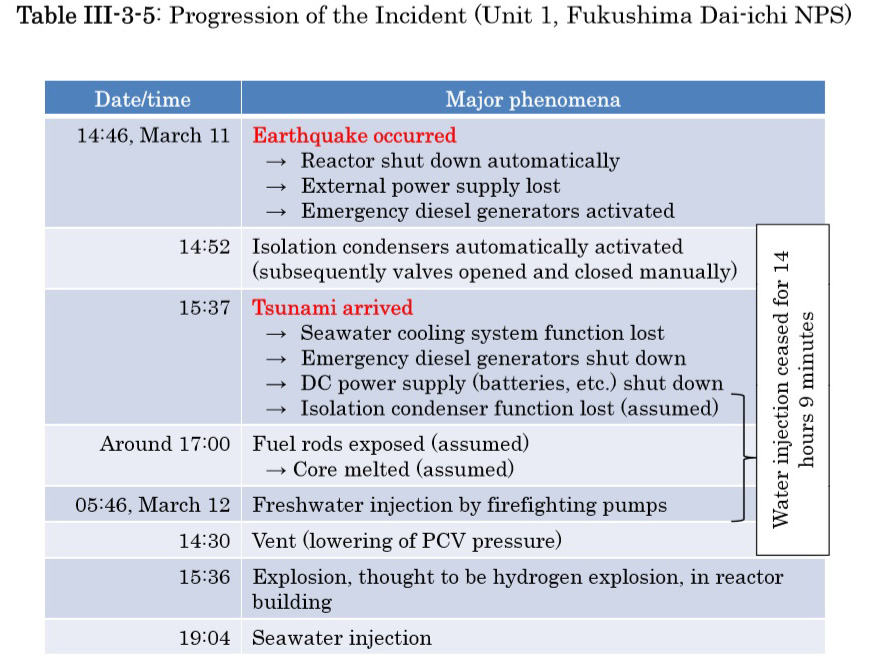
Timeline of Unit 1 accident evolution:
(See Figure III-3-5)
Review:
a. The loss of DC 125V power severely affected the tripping function of various levels of circuit breakers (as their protection and control circuits require DC 125V as the operating power source). This could lead to a larger-scale accident (burning of lines and upstream/downstream equipment) and reduce the ability to restore power, lowering the reliability of both internal and external power supplies in the plant.
b. Although DC 125V power systems are typically dual or multiple-looped, where any single functioning loop can maintain the system, this redundancy still cannot prevent common-mode failures.
c. If POCT (trip-free type requiring no operating power) systems were installed, design diversity could be achieved to prevent such common-mode failures. The function is equivalent to adding a high-voltage, high-current, earthquake-resistant fuse on the power line that remains functional both during and after an earthquake, ensuring that circuit breakers trip under overcurrent conditions.
Applicability: Suitable for various voltage levels and high current environments (such as power plants, transmission lines, switchyards, large power consumers, and communities).
Post-Fukushima Response – AEC Regulatory Tracking Case LM-JLD-10120, 2012/11/05:
a. In response to the comprehensive nuclear safety inspections following the Fukushima accident, Taipower was required to strengthen and enhance the reliability of external power systems at nuclear power plants.
b. Taipower was also required to review the reliability of external power systems in the face of similar natural disaster threats, to not only maintain supply capacity but also minimize and quickly recover from power outages.
c. etc.…
 April 28, 2025 – Major Power Outage Incident in Portugal, Spain, and Western Europe.
 Explosion Incident at Hsintienlun Power Plant on October 28, 1993, at 4:03 PM
POWERED BY © 2024 WebG Design Studio